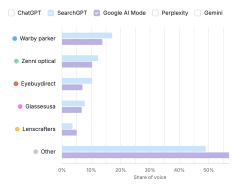
When potential customers search “[Your Brand] Reviews” before buying, where do they land? If you don’t control that search result, you’re letting review sites, forums, and competitors shape your brand narrative. A dedicated, SEO-optimized reviews page lets you own the conversation and convert skeptical searchers into confident buyers.
This guide shows you how to create and rank a brand reviews page that captures review traffic and boosts conversions.
Why a Dedicated Reviews Page Matters
Branded review searches are high-intent. People searching “Nike reviews” or “Allbirds reviews” are close to purchase—they just need social proof to push them over the edge. If you rank for these searches with your own reviews page, you control the narrative and capture that ready-to-buy traffic.
| Reviews Page Benefit | SEO Impact | Business Result |
|---|---|---|
| Ranks for branded terms | Captures review traffic | Higher conversion rates |
| Centralizes social proof | Trust signals | Reduced purchase hesitation |
| Schema markup potential | Rich snippets in SERPs | Higher click-through rates |
| Internal linking hub | Distributes authority | Boosts product page rankings |
Without a dedicated reviews page, branded review traffic goes to third-party sites like Trustpilot, Yelp, or Reddit—where you can’t control the presentation or counter negative reviews with context.
Strategic Integration: Your reviews page works alongside your product reviews strategy and Google Shopping reviews to create multiple trust signals across the customer journey.
How to Research Branded Review Keywords
Check Search Volume
Before building your reviews page, verify there’s actual search demand:
- Use Google Keyword Planner, Ahrefs, or Ubersuggest
- Search for “[Your Brand Name] reviews”
- Check monthly search volume
- Look for related terms like:
- “[Brand] customer reviews”
- “[Brand] ratings”
- “Is [Brand] legit”
- “[Brand] worth it”
Established brands typically see 100-1,000+ monthly searches for branded review terms. Even newer brands with 10-50 searches should create this page—volume grows as you grow.
Analyze Competition
Search your brand name + “reviews” on Google:
- Who currently ranks?
- Are review aggregators (Trustpilot, Sitejabber) dominating?
- Do you have any presence in the results?
- What content format are top results using?
If third-party review sites dominate, you have a clear opportunity to claim that space.
Common Mistake: Creating a generic “Testimonials” page instead of targeting “[Brand] Reviews” specifically. The keyword targeting matters—match search intent exactly.
How to Create Your Reviews Page
Step 1: Set Up the Page in Shopify
- Log into Shopify Admin
- Navigate to Online Store > Pages
- Click Add page
- Title: “[Your Brand Name] Reviews”
- URL handle:
/pages/[brand-name]-reviews - Meta description: “Read authentic [Brand] reviews from verified customers. See ratings, photos, and detailed feedback on our products and service.”
The exact URL structure matters—/pages/brand-reviews or /reviews both work, but be consistent with your brand name in the title.
Step 2: Aggregate Review Content
Pull reviews from multiple sources to create comprehensive social proof:
Shopify Product Reviews: Export reviews from your product reviews system and feature the best ones prominently.
Third-Party Platforms: If you have Trustpilot or Google reviews, embed widgets or manually showcase top reviews with attribution.
Video Testimonials: Embed customer video reviews (see embed youtube videos strategy) for maximum impact.
Photo Reviews: Display customer photos showing products in use—these build more trust than text alone.
Use a Shopify reviews app like Judge.me or Loox to:
- Automatically request reviews post-purchase
- Collect photo and video reviews
- Import reviews from other platforms
- Display aggregated ratings with star visuals
Step 3: Optimize with Schema Markup
Add Review schema to help Google display star ratings in search results. This is separate from your Shopify product schema but equally important:
{
  "@context": "https://schema.org",
  "@type": "Organization",
  "name": "Your Brand Name",
  "aggregateRating": {
    "@type": "AggregateRating",
    "ratingValue": "4.8",
    "reviewCount": "1247"
  }
}
Add this to your reviews page’s <head> section. Update the rating and review count regularly to keep it accurate.
Step 4: Optimize Content for Keywords
Structure your page to target branded review searches:
H1 Tag: “[Brand Name] Reviews: What Customers Are Saying”
Introduction: “Looking for honest [Brand] reviews? Read authentic feedback from 1,000+ verified customers about our [main product category].”
Section Headers:
- “Overall Customer Ratings”
- “Featured Customer Reviews”
- “Product-Specific Reviews”
- “Frequently Asked Questions About [Brand]”
Naturally incorporate variations of your target keyword throughout the content without over-optimizing.
Step 5: Build Internal Link Structure
Make your reviews page discoverable:
Navigation Menu: Add to footer or secondary navigation with anchor text “[Brand] Reviews”
Product Pages: Link from product descriptions: “Read [Brand] reviews from verified customers”
Homepage: Feature review count and link: “Join 5,000+ happy customers - Read reviews”
Blog Content: Reference reviews in relevant Shopify blog setup posts about social proof
Strong internal linking helps the page rank faster and distributes authority throughout your site.
Advanced Review Page Strategies
Real-Time Updates: Configure your reviews app to automatically add new reviews to the page, keeping content fresh for Google.
Filtering Options: Let visitors filter by product, rating, or date to find relevant reviews quickly.
Response to Reviews: Publicly respond to reviews (especially negative ones) to show active customer service and build trust.
Comparison Content: Create sections comparing your reviews to competitor alternatives—works well for affiliate program SEO strategies.
Trust Badges: Display any third-party verification badges (BBB, Google Customer Reviews, etc.) to reinforce legitimacy.
Monitor and Improve Performance
Track your reviews page success:
Search Console Metrics:
- Impressions for “[Brand] reviews” keyword
- Click-through rate (aim for 5-10%+)
- Average position (target top 3)
Google Shopping Reviews:
- Coordinate with Google Shopping reviews to get star ratings in ads and shopping results
Conversion Impact:
- Track goal completions for visitors landing on reviews page
- Monitor how review page traffic converts vs. other sources
- A/B test different review presentations
Most brands see the page ranking within 2-4 weeks for branded review terms, with positions improving as reviews accumulate and the page gains authority.
Maintain Review Quality
Encourage Honest Feedback: Don’t filter out negative reviews—authenticity builds more trust than perfection.
Regular Updates: Add new reviews weekly to keep content fresh and show ongoing customer satisfaction.
Photo/Video Priority: Prioritize visual reviews—they convert 3-5x better than text-only testimonials.
Address Concerns: If negative patterns emerge, address the root issues and update the reviews page to show improvements.
A well-optimized reviews page becomes one of your highest-converting assets. It captures review-intent traffic, builds trust with skeptical visitors, and gives you complete control over your brand narrative.
Related Guides
Product Reviews Strategy
Collect and display product-specific reviews to boost conversions.
Read Guide →Google Shopping Reviews
Get star ratings in Google Shopping and search results.
Read Guide →Affiliate Program SEO
Leverage affiliates to create review content and backlinks.
Read Guide →Shopify Blog Setup
Create blog content that references and links to your reviews page.
Read Guide →Embed YouTube Videos
Add video testimonials to your reviews page for higher engagement.
Read Guide →Shopify Product Schema
Implement review schema for rich snippets in search results.
Read Guide →Shopify store traffic stuck? You're not alone.
We help Shopify stores rank higher in Google, attract quality traffic, and turn visitors into customers.
🚀 Trusted by 500+ Shopify merchants