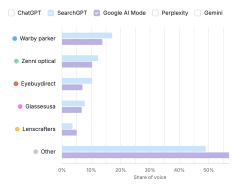
Most stores target the same keywords on multiple pages, creating internal competition that tanks rankings. Without a keyword mapping strategy, you’re fighting yourself—ten pages competing for “running shoes” means none rank well.
Keyword mapping assigns one primary keyword to each page strategically, eliminating cannibalization and maximizing your store’s total ranking potential. This guide shows you how to research, map, and implement keywords systematically.
Why Keyword Mapping Matters
Random keyword targeting creates chaos. Strategic mapping ensures every page has a clear purpose and unique ranking opportunity without competing against your own content.
| Keyword Mapping Benefit | SEO Impact | Business Result |
|---|---|---|
| Eliminates cannibalization | Pages don’t compete | Higher individual rankings |
| Covers more keywords | Ranks for thousands of terms | More traffic sources |
| Clarifies content purpose | Focused optimization | Better conversions |
| Prevents gaps | No missed opportunities | Complete market coverage |
Properly mapped keywords typically increase a store’s total organic traffic by 30-60% within 6 months—you’re capturing searches you were previously losing to competitors or your own cannibalization.
Foundation for Everything: Keyword mapping informs Shopify title tags, Shopify h1 tags, and Shopify entity keywords strategy. Get mapping right first, then optimize individual elements.
How to Research Target Keywords
Step 1: Use Google Keyword Planner
- Create or log into Google Ads account (free, no spending required)
- Navigate to Tools > Keyword Planner
- Select Discover new keywords
- Enter seed keywords related to your products:
- Product categories (“men’s running shoes”)
- Product types (“wireless headphones”)
- Use cases (“yoga mat for beginners”)
- Review suggestions sorted by relevance and search volume
- Export keywords with 10+ monthly searches
Focus on keywords with clear commercial intent—people searching with buying signals, not just information seeking.
Step 2: Analyze Search Intent
Group keywords by intent type:
Transactional: “buy Nike shoes,” “best price laptop” → Product pages Commercial: “Nike vs Adidas shoes,” “laptop reviews” → Comparison or review pages Informational: “how to choose running shoes” → Blog content Navigational: “Nike official store” → Homepage or brand pages
Match keywords to appropriate page types based on what searchers actually want.
Step 3: Identify Keyword Gaps
Check what competitors rank for that you don’t:
- Use Ahrefs or SEMrush competitor keyword analysis
- Export competitor keyword lists
- Cross-reference against your current rankings
- Identify high-value keywords you’re missing
- Create pages targeting those gaps
Gaps represent immediate ranking opportunities where you have no presence.
Common Mistake: Targeting keywords with zero search volume. Even perfect optimization can’t create traffic when no one searches the term. Minimum 10 monthly searches for viability.
How to Create Your Keyword Map
Build Your Master Spreadsheet
Create a keyword mapping document with these columns:
Page URL: The specific page targeting this keyword Primary Keyword: Main target (one per page) Secondary Keywords: 2-5 related variations Search Volume: Monthly searches Search Intent: Transactional/Commercial/Informational Current Status: Implemented/Pending/Needs Work
Assign Keywords to Pages
One Primary Keyword Per Page: Never target the same primary keyword on multiple pages—this creates cannibalization
Product Pages: Specific product names + category
- Example: “Women’s Running Shoes Nike Air Max”
Collection Pages: Broad category terms
- Example: “Women’s Running Shoes”
Blog Posts: Informational long-tail keywords
- Example: “How to Choose Running Shoes for Flat Feet”
Homepage: Brand + main category
- Example: “Athletic Shoes & Sportswear | BrandName”
Organize by Topic Clusters
Group related pages together:
Main Cluster Page: Broad keyword (collection page) Supporting Pages: Specific variations (product pages) Content Pages: Informational keywords (blog posts)
Cluster structure allows internal linking that passes authority throughout related content.
How to Implement Keywords
Step 1: Optimize Title Tags
Implement primary keywords in Shopify title tags:
- Log into Shopify Admin
- Navigate to Products or Pages
- Edit each page
- Scroll to Search engine listing preview
- Click Edit website SEO
- Add primary keyword to Page title field
- Follow title tag length guidelines (50-60 characters)
- Save changes
Ensure no fix missing titles or fix duplicate titles issues exist before mapping keywords.
Step 2: Optimize H1 Tags
Add keywords to Shopify h1 tags:
- Edit product or page content
- Ensure H1 tag includes primary keyword naturally
- Don’t keyword stuff—keep it readable
- H1 should match or closely align with title tag
Step 3: Update Meta Descriptions
Include primary keyword in meta descriptions:
- In Search engine listing preview section
- Write compelling 150-160 character description
- Include primary keyword naturally
- Add call-to-action to improve CTR
Step 4: Optimize Body Content
Integrate keywords throughout content:
Natural Placement: Use primary keyword 2-4 times in body text Secondary Keywords: Sprinkle related terms throughout Context Matters: Keywords must fit naturally—never force them User-First: Write for humans, optimize for search engines second
Audit Your Implementation
Use Screaming Frog
- Crawl your entire store
- Export Page Titles and H1 data
- Compare against your keyword map
- Identify pages missing keyword implementation
- Find potential cannibalization (multiple pages targeting same keyword)
Monitor Rankings
Track keyword positions:
Weekly: Check top 20 target keywords Monthly: Review all mapped keywords Quarterly: Reassess and update keyword map based on performance
Pages not ranking within 3 months need content refreshes or keyword adjustments.
Advanced Keyword Mapping Strategies
Entity Keywords: Incorporate Shopify entity keywords for topical authority and semantic relevance
Seasonal Updates: Rotate primary keywords for seasonal products (winter coats, summer dresses)
Competition Analysis: Adjust mapping based on competitor difficulty—go after easier wins first
Long-Tail Focus: Target 100 long-tail keywords (10-100 searches/month) rather than 10 head terms (10,000+ searches/month)
Regular Refreshes: Update keyword map quarterly as search trends evolve and new opportunities emerge
Most stores see first-page rankings for 40-60% of their mapped keywords within 6 months with proper implementation and content quality.
Related Guides
Shopify Title Tags
Implement mapped keywords in optimized title tags.
Read Guide →Shopify H1 Tags
Add mapped keywords to H1 tags for on-page optimization.
Read Guide →Shopify Entity Keywords
Enhance keyword strategy with entity-based semantic SEO.
Read Guide →Fix Missing Titles
Ensure all pages have titles before implementing keyword mapping.
Read Guide →Fix Duplicate Titles
Resolve duplicate titles that conflict with keyword mapping strategy.
Read Guide →Title Tag Length
Keep keyword-optimized titles within character limits.
Read Guide →Shopify store traffic stuck? You're not alone.
We help Shopify stores rank higher in Google, attract quality traffic, and turn visitors into customers.
🚀 Trusted by 500+ Shopify merchants